
That sharp, stabbing pain in your heel with your first steps in the morning can stop you in your tracks. If you’re an active person, dealing with foot pain from plantar fasciitis is frustrating and can keep you from your favourite activities. You might have heard that massage can help, and you’re looking for a way to get back on your feet without the discomfort.
While massage can feel good and provide some relief, a comprehensive physiotherapy plan is designed to address the root cause of your foot pain for more lasting results. Our team at Recovery Lab helps you move beyond just the sore spot to understand why the pain started, offering a path toward both relief and prevention through effective physiotherapy treatments.
What Is Plantar Fasciitis & Why Does It Affect You?
Your foot has a thick band of tissue that runs across the bottom, connecting your heel bone to your toes. This is your plantar fascia. When it becomes inflamed or irritated, you feel the distinct pain of plantar fasciitis. For people who are on their feet a lot, this can be a common issue.
Active people often experience this due to changes in activity, like starting a new running program or increasing workout intensity. Other factors include footwear that doesn’t provide enough support or spending long hours standing on hard surfaces. Your body is sending a clear signal that the tissue is under too much strain, which is where sports injury physiotherapy can help.
Key Symptoms to Notice
You might be dealing with plantar fasciitis if you experience:
- A sharp, stabbing pain near your heel
- Discomfort that gets worse after periods of rest, like sitting for a while
- Pain that is most noticeable with your first few steps in the morning
How Physiotherapy Can Help Heel & Arch Pain
Instead of just focusing on the pain in your foot, physiotherapy looks at the whole picture. Your therapist assesses how your entire lower body moves—from your hips and knees down to your ankles and feet. This helps identify the underlying issues that contribute to the strain on your plantar fascia.
This approach moves beyond simply treating the symptom. A physiotherapist combines different physiotherapy treatments to create a plan that fits your specific needs. The goal is to reduce your current pain, heal the tissue, and help you build strength to prevent the problem from returning.
The Role of Massage in a Physio Plan
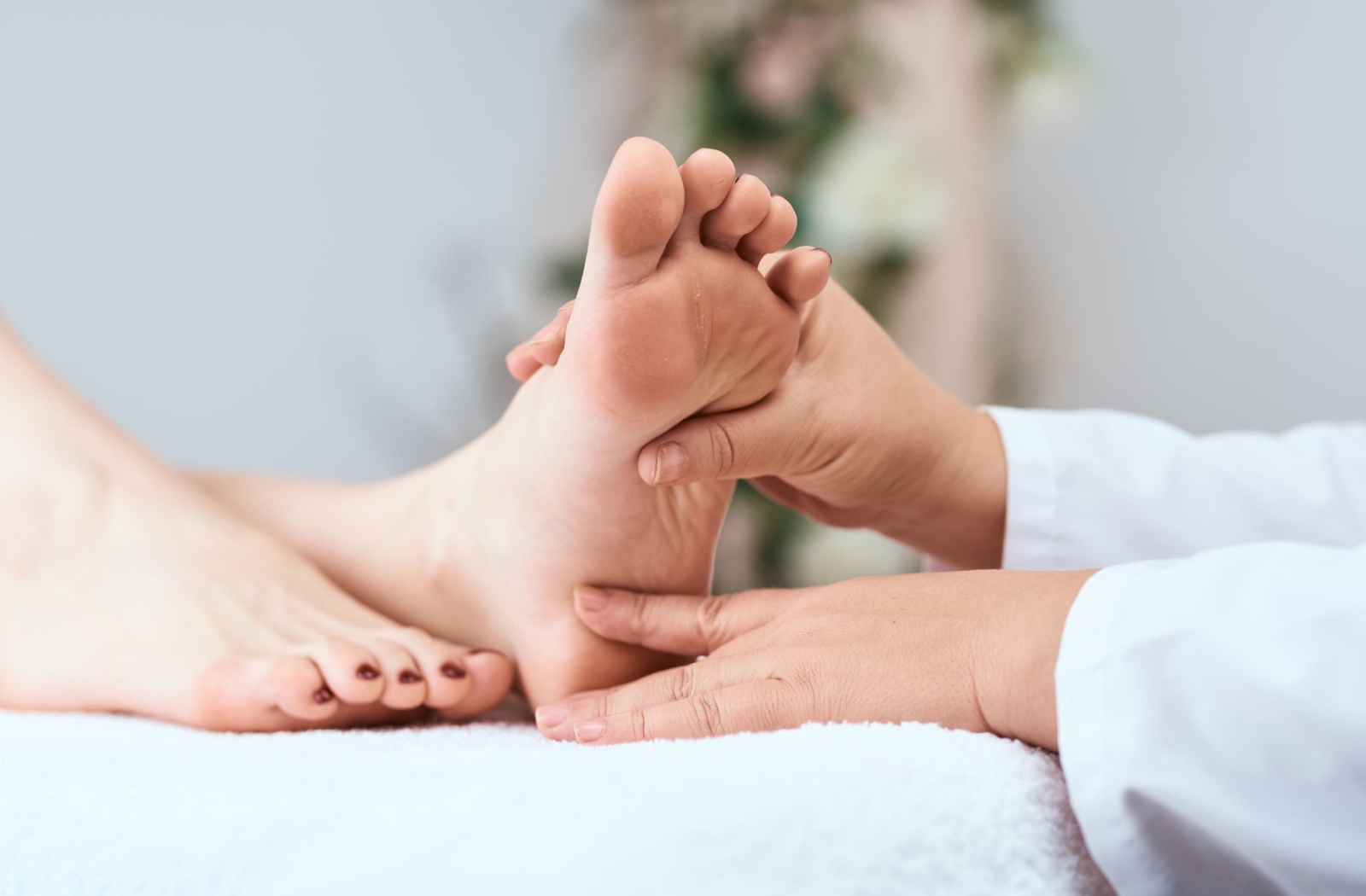
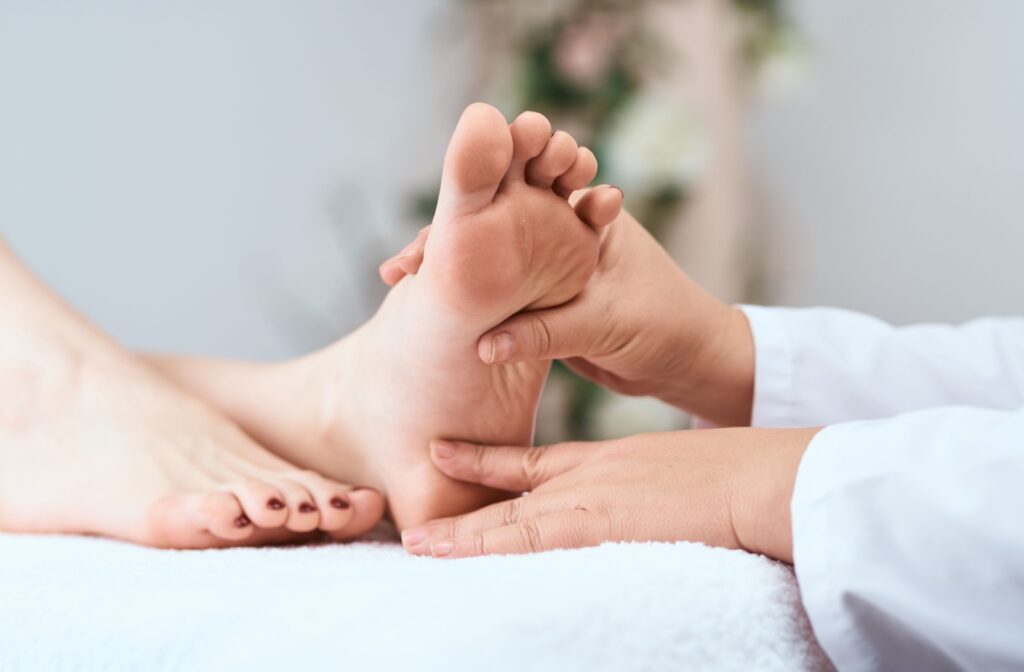
Massage is often one of the tools a physiotherapist uses within your treatment plan. It can be a very effective part of the recovery process. Gentle, targeted massage therapy techniques can help improve blood flow to the affected area, which supports your body’s natural healing process.
It also helps ease tension in the muscles of your foot and calf. Tight calf muscles can pull on your heel bone and add stress to the plantar fascia. By releasing this tension, massage can help reduce the strain on that sensitive tissue.
Core Components of a Physiotherapy Plan
A typical physiotherapy plan for plantar fasciitis is built around a few key elements. It starts with hands-on manual therapy from a trained professional to address the tissue directly. This is combined with a personalized program of stretches and exercises to restore function.
Your plan may also include valuable education on things like choosing the right footwear or making small changes to your activities. This knowledge empowers you to support your recovery between sessions and helps you avoid future flare-ups. Your plan is tailored to you and your goals.
Types of Manual Therapy
A physiotherapist may use specific hands-on techniques to help your recovery. This can include soft tissue release to work directly on the plantar fascia and surrounding muscles, similar to how fascial stretch therapy targets connective tissues. They may also focus on your calf muscles to reduce the tightness that pulls on your heel.
Joint mobilization is another technique that can be used. This involves gentle movements to the joints in your foot and ankle. The goal is to restore proper mechanics so your foot can move the way it’s supposed to, without extra stress.
Strengthen & Stretch Exercises
Your physiotherapist guides you through exercises designed to help you heal. These often include specific stretches for your calf muscles and Achilles tendon to improve flexibility. You might also do exercises like towel curls to build strength in the small muscles of your foot.
Balance exercises may also be part of your plan. Improving your stability helps your body better manage the load on your feet when you stand, walk, or run. This combination of stretching and strengthening creates a strong foundation for recovery and can improve your overall mobility.
At-Home Techniques to Support Your Treatment
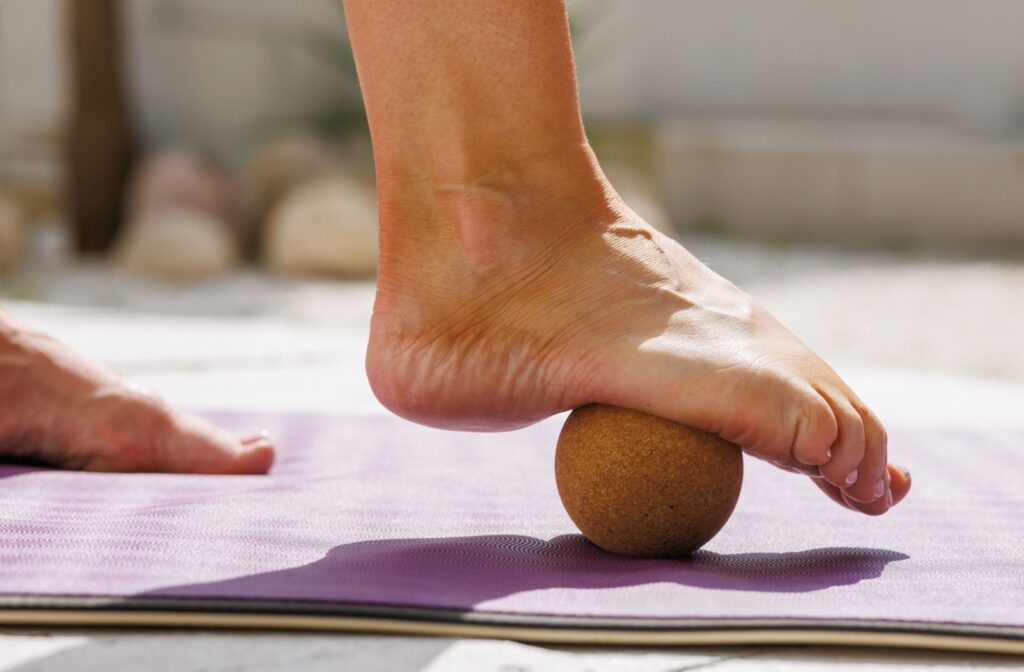
What you do at home is just as important as your work in the clinic. Your physiotherapist can also show you some simple at-home techniques you can use to manage discomfort and support your progress. This often includes some form of self-massage for daily relief.
When you do these techniques, remember that consistency is more important than intense pressure. You want to work with your body, not against it. It’s important to listen to your body’s signals and avoid doing anything that causes sharp pain.
Simple Self-Massage Ideas
Here are a few things you can try at home:
- Gently roll your foot over a tennis ball or a similar-sized ball.
- Use a frozen water bottle to get the benefits of both massage and cold therapy for inflammation.
- Apply gentle pressure along your arch with your thumbs, moving from the ball of your foot toward your heel.
Your Path to Foot Health & Prevention
As you start to feel better, your focus can shift toward a gradual and safe return to your activities. A key part of your plan is learning how to pace yourself, which is one of the many physiotherapy advantages for athletes looking to avoid re-injury. You can develop long-term habits that promote healthy feet for years to come.
Prevention is all about understanding your body and knowing what it needs. This might mean incorporating a regular stretching routine, being more mindful of your footwear, or learning to spot the early signs of a flare-up so you can manage it quickly.
Make This Your Home for Recovery
A successful recovery combines professional care with your own efforts at home. By focusing on prevention, you can stay active and continue to do the things you love. This knowledge gives you the tools to manage your symptoms effectively.
Take the first step on your path back to pain-free movement. Our team at Recovery Lab is here to help you create a personalized plan and find your home for recovery. Contact us today to learn more.