
If you have a stiff, aching lower back, you know what it’s like for discomfort to follow you everywhere. From getting out of bed in the morning to picking up your kids to working all day at your desk, maybe it’s become a daily companion for you. For a lot of people in Red Deer, a stiff lower back can slow down workouts, impact work, and even affect time with the people you love.
At Recovery Lab, we want you to know that while it can feel frustrating, it’s not hopeless: There is a path to feeling better.
You can often loosen a tight lower back with a combination of gentle at-home stretches and professional care. A tight lower back rarely exists in isolation, which is why we take a full-body approach to your care. Whether you could benefit from massage therapy, osteopathy, or physiotherapy, we have practitioners from all backgrounds under our roof.
Why the Lower Back Talks so Much
The lower back is an area that can absorb everything else your body is or isn’t doing. When you sit for long periods, when your hips are tight, when your core hasn’t been doing its job, when you’re carrying chronic stress or sleeping poorly, the lower back tends to pick up the slack.
That’s part of why simple stretching often helps temporarily but doesn’t resolve the issue. Stretching the place that’s complaining doesn’t always address contributing factors elsewhere in the body.
Recovery Lab was built on the idea that figuring out what your body needs shouldn’t be a research project you have to do yourself. When tight back pain is part of a bigger pattern (and it often is), having a team that can identify the real driver can help get you actual relief.
Things You Can Try at Home
For low-grade tightness, gentle movement and stretching can give you real relief and help you understand what your body responds to. This is a great first step to take if you only notice the discomfort occasionally.
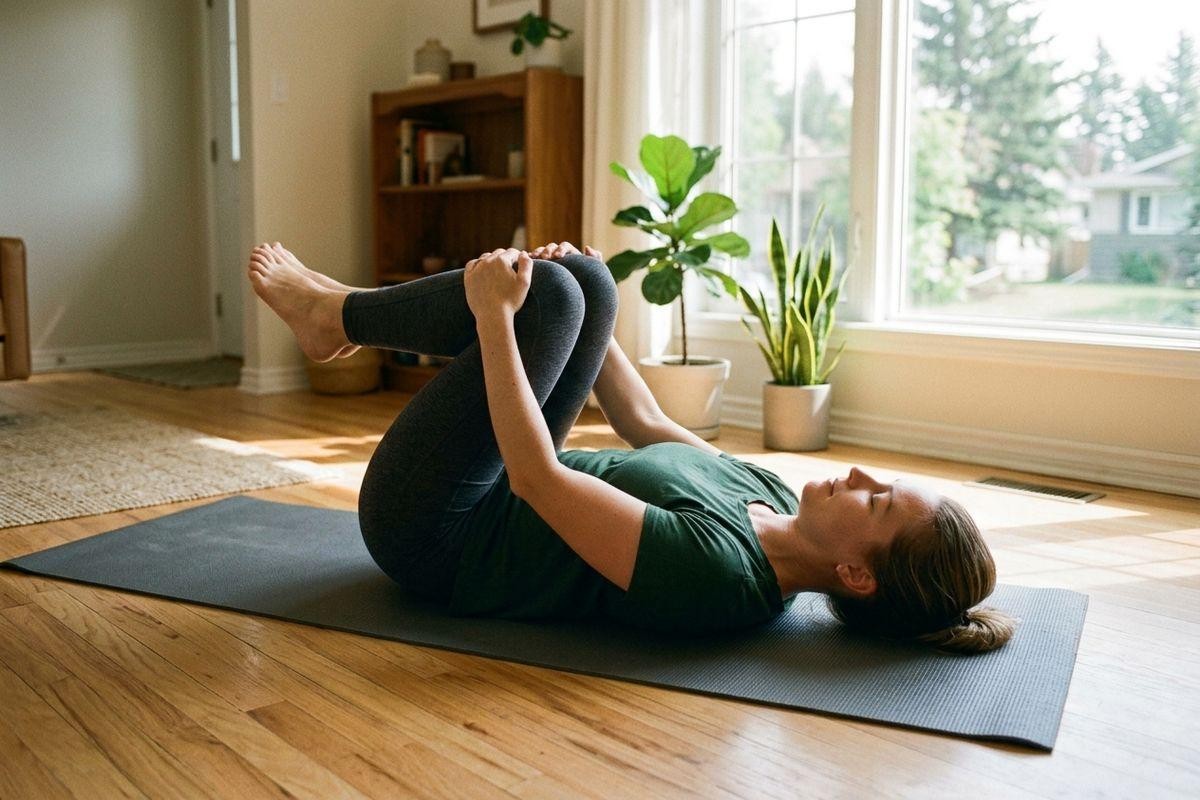
Knees to chest, a slow lower-back twist with your knees dropping to one side, and cat-cow on your hands and knees can all help mobilize the spine without loading it heavily. Bridges and gentle pelvic tilts can “wake up” the muscles that support the back, so it doesn’t have to carry as much on its own.
If you have a tight lower back, we often recommend stretching your hamstrings. That might seem unexpected, but they can be helpful because tight hamstrings can tug on the pelvis and impact the lower back. Move slowly, breathe deeply, and aim for a mild stretch, never a sharp pull.
A guiding principle here at Recovery Lab is to be gentle, frequent, and consistent. A few minutes every day can really add up and tends to outperform a single long session a week. If something hurts in a way that’s sharp, shooting, or worsening, stop and treat it as information to bring to a professional rather than something to push through.
When Tightness Warrants Assessment
Low back pain is 1 of the most common physical complaints in adults, so our team handles this a lot. But that doesn’t mean everyone’s back pain is the same, or should be treated with the same approach. Some cases of low back pain can be managed with stretches or massage therapy, but because more significant issues can develop in this area, it’s important to know when a professional opinion may be helpful.
When to See Our Team
Book an assessment with a physiotherapist or physician if any of the following are present:
- Pain that radiates down 1 or both legs
- Numbness or tingling in your legs or feet
- Weakness in a leg or foot
- Loss of bowel or bladder function
- Pain following an injury or impact
- Pain that consistently wakes you up at night
- Stiffness that hasn’t improved at all after a few weeks of gentle home care
These can be signs of nerve involvement or other issues that need clinical testing rather than symptom-based guesses. At Recovery Lab, this is part of why we take an individualized approach to your care. Pain shows up differently in everyone and can be caused by many factors, so by personalizing your treatment plan, we can provide better long-term treatment outcomes for your specific situation.
How Recovery Lab Approaches Lower Back Pain
Initial Assessment
For people whose lower back pain has not improved with home care, we may recommend that physiotherapy leads our approach. Our physiotherapists are trained to assess for what’s actually driving your pain, whether that’s a movement pattern issue, hip or core weakness, joint involvement, fascial restriction, or something more specific like a disc or nerve issue that needs targeted attention. That clinical assessment tells us what care actually fits your situation, so treatment addresses the factors contributing to your symptoms.
Possible Treatment Options
Once your practitioner has talked with you about your priorities and built your plan together, the rest of our team contributes where the plan calls for it. Massage therapy can be effective for addressing the muscular tension and protective guarding that builds up around a sore back. Fascial stretch therapy can address connective tissue and hip mobility restrictions that are sometimes underneath chronic lower back tightness.
Some patients may benefit from techniques such as RAPID NeuroFascial Reset as part of their overall treatment plan, depending on their assessment and response to care. Recovery tools like the infrared sauna and NormaTec compression can support your body between sessions.
Our Experience
The point isn’t to layer every service at once. Our Recovery Lab Experience is about coordinating the right services at the right moments, planned by practitioners who are communicating about what you need.
Having a wide range of services and practitioners under 1 roof means you don’t have to repeat your story every time you come in. Our team is communicating with each other, discussing your options, and building a plan that meets you where you’re at so that you can focus on recovering.
Book Your Consultation
If your lower back has been giving you discomfort, or if any of the warning signs above are part of the picture, our team would love to see you. From there, we’ll figure out what your body needs and how our practitioners can support your recovery.
You don’t have to keep guessing. Book online or reach out, and we’ll take it from there. This is your home for recovery.